
Last updated October 15, 2026
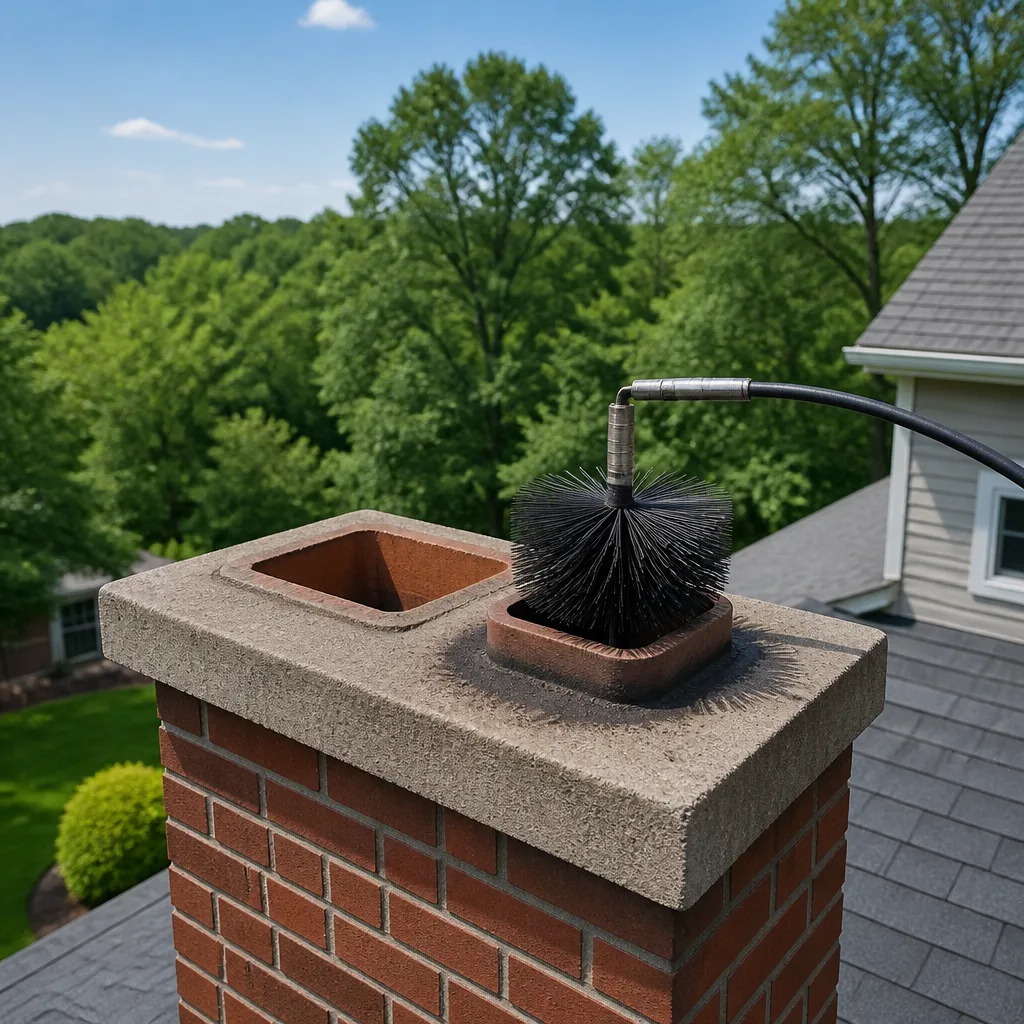 Sweep & inspection
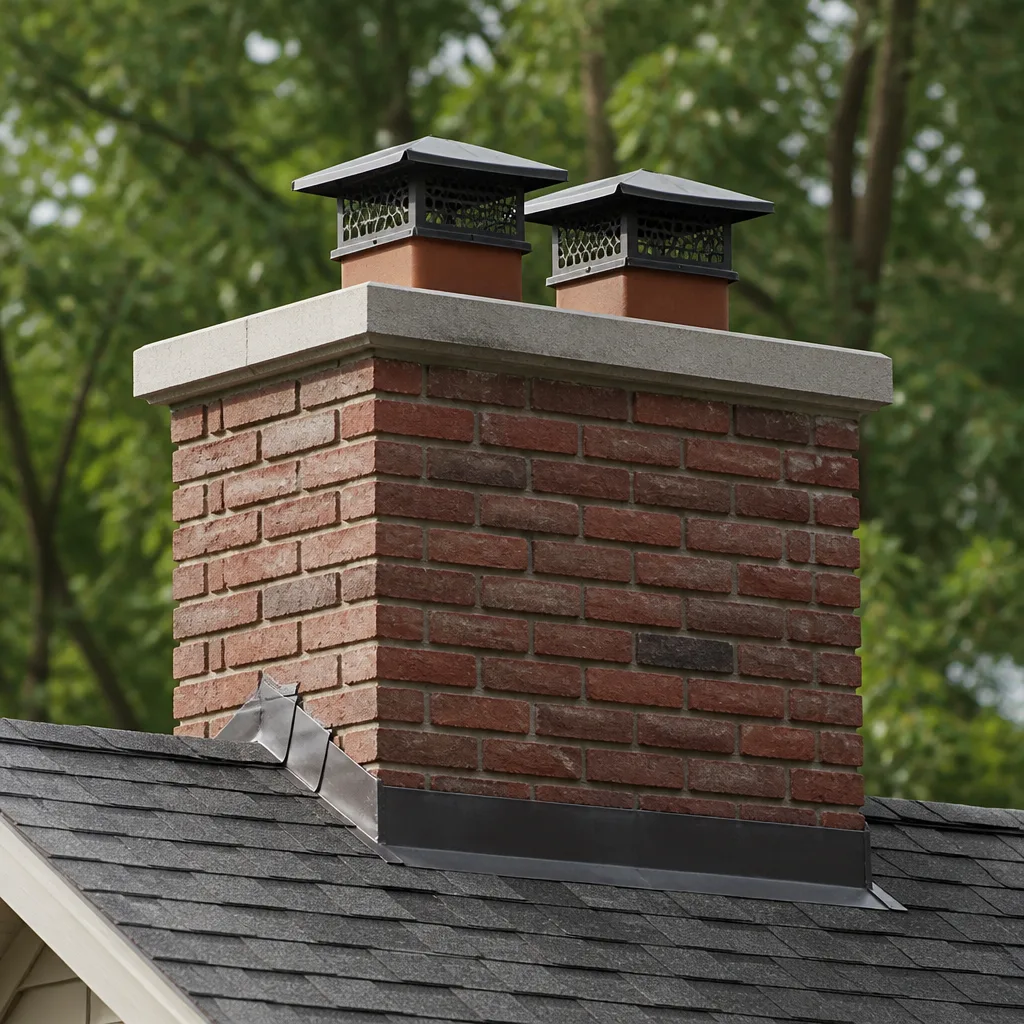 Caps & crowns
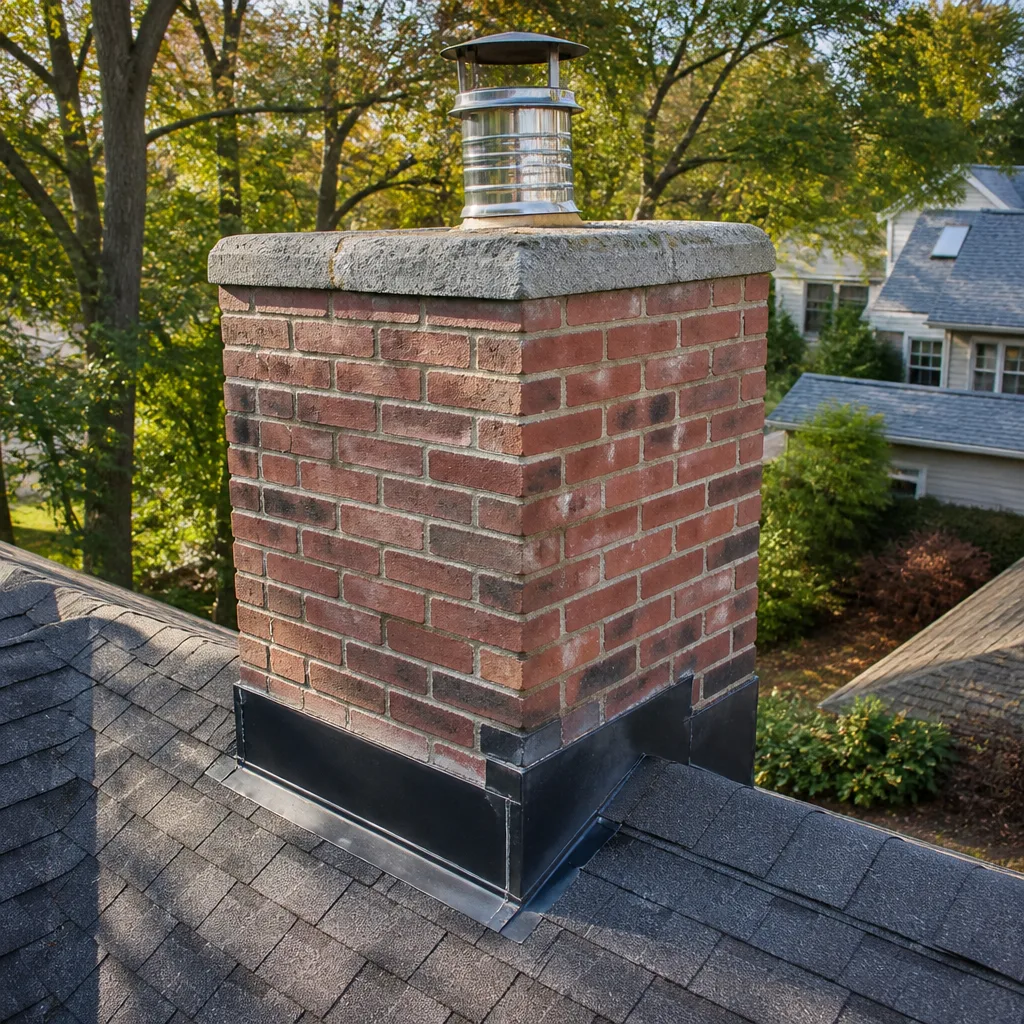 Flue relining
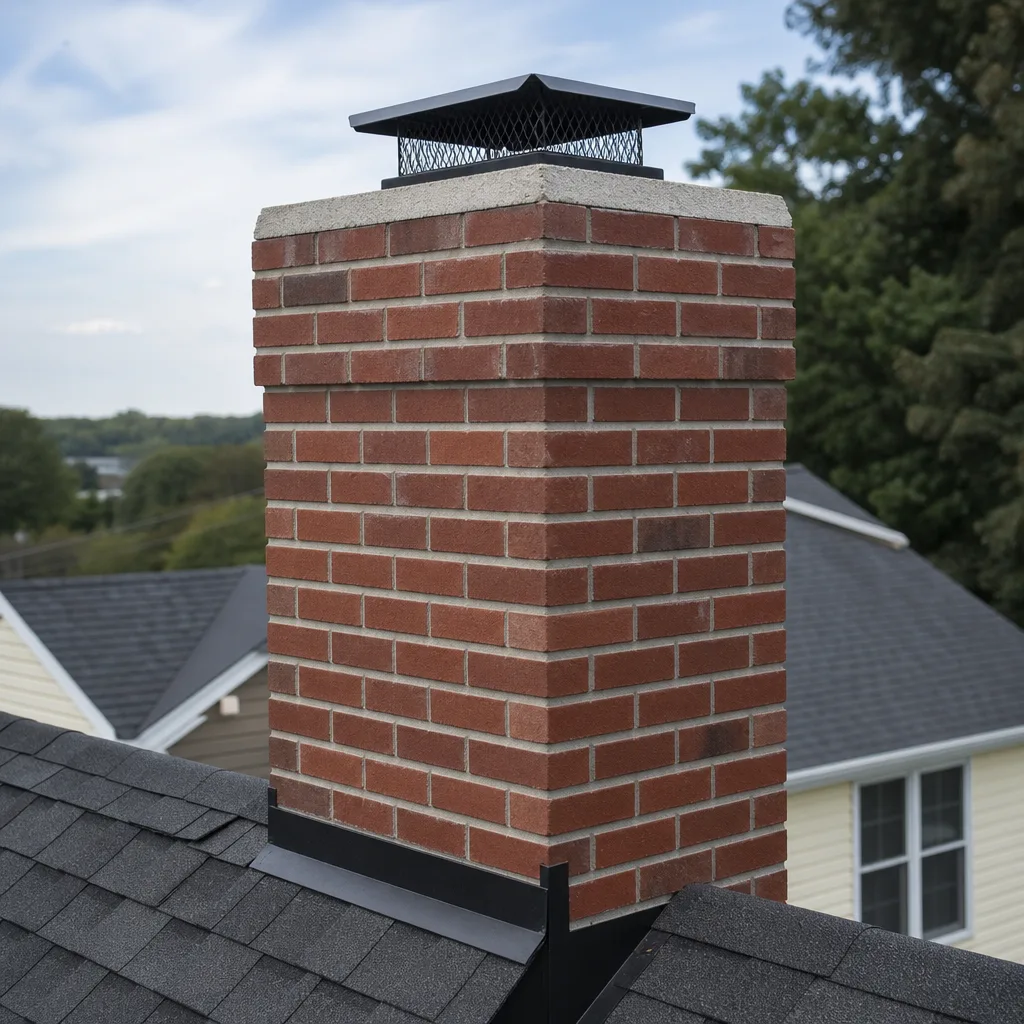 Masonry repair
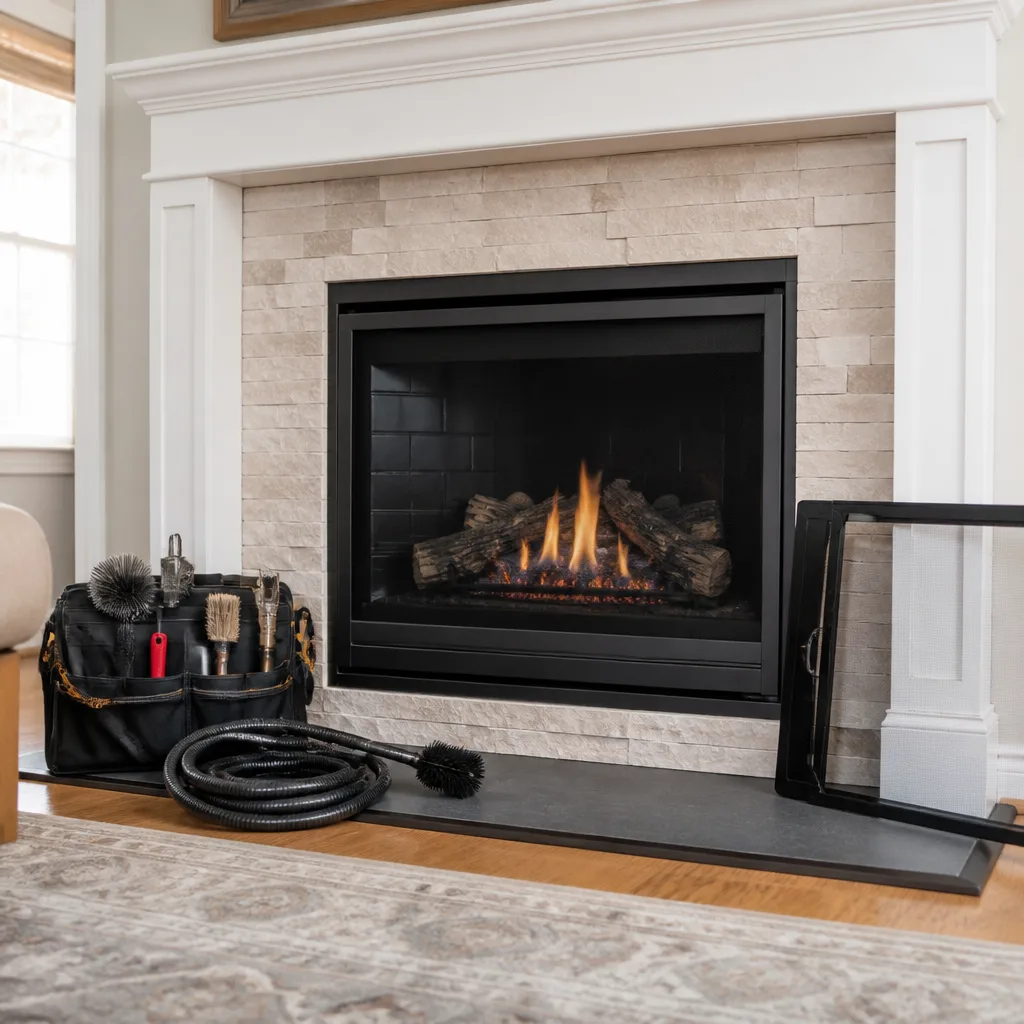 Gas fireplace service
Level 1 sweep and inspection to the NFPA 211 annual standard - flue, crown, cap, and flashing checked and photographed
Chimney sweep logs do not sweep chimneys. They loosen some creosote - which then falls where a brush and vacuum still have to collect it.
The Complete Guide to Chimney Cleaning in San Jose
The CSIA puts the number at roughly 25%: one in four home heating fires traces back to creosote buildup. But here’s what rarely gets said in San Jose: the bigger risk in Santa Clara County isn’t just the fire you might have. It’s paying for a “comprehensive” chimney cleaning that skips the camera inspection entirely, then finding out six months later that your flue liner was cracked the whole time. This guide breaks chimney cleaning into the three separate jobs it actually is, so you’ll know exactly what to order, what to skip, and what a fair price looks like in San Jose. For year-round seasonal care tips, see our dedicated guide.
Quick Answer
Chimney cleaning in San Jose typically costs $169 to $349 for a standard sweep, depending on flue condition, accessibility, and whether it’s been more than two years since the last cleaning. That price should always include a visual inspection of the firebox, damper, and flue interior. If a contractor quotes “cleaning and inspection” but can’t tell you what level of inspection they’re performing, you’re not getting a real inspection.
Styles & brands we work with
Table of Contents
- What “Chimney Cleaning” Actually Means in San Jose
- The Three Jobs Hidden Inside One Service
- How Bay Area Burning Patterns Change Creosote Buildup
- What a Fair Price Looks Like in San Jose
- What a Written Price Confirmation Should Include
- Local Red Flags: Santa Clara County’s No-Show Problem
- The Kingswell Guarantee and How to Use Written Guarantees as a Hiring Benchmark
- Common Mistakes to Avoid
What “Chimney Cleaning” Actually Means in San Jose
Ask three different San Jose chimney companies what “cleaning” includes and you’ll get three different answers. One sweeps the flue and leaves. Another sweeps, checks the damper, and hands you a one-page report. A third runs a camera up the flue and finds a cracked liner that the first two missed entirely. That range is why the word “cleaning” causes so much confusion-our DIY vs Professional Chimney Cleaning guide for San Jose explains why it’s not one service. It’s a bundle that most companies assemble differently, and the assembly questions are where homeowners in San Jose get overcharged or under-served.
In our experience after more than two decades working on San Jose chimneys, the cleanest way to think about it is this: a proper chimney cleaning has three components. The sweep removes creosote and soot from the flue. The inspection assesses the condition of the flue, firebox, damper, and exterior chase. And the repair scoping determines whether anything found in the inspection actually needs work now, next season, or not at all. A company that quotes you $99 for a sweep and never mentions inspection is selling you one-third of the service. A company that quotes $499 and starts pushing a liner replacement before showing you camera footage is selling you a problem you can’t verify.
San Jose’s housing stock adds another layer. Homes in Willow Glen, Rose Garden, and Naglee Park have original masonry chimneys from the 1920s through the 1950s. Homes in Evergreen, Almaden Valley, and Berryessa tend to be newer, with prefabricated metal chimneys instead of brick and mortar. These two chimney types age differently, clean differently, and have different failure modes. Any company that treats them the same is cutting corners.
The Three Jobs Hidden Inside One Service
Here’s the breakdown we use when a San Jose homeowner calls and says, “I need my chimney cleaned.” We explain the three components and let them decide what’s actually needed.
Job One: The Sweep
The sweep is the physical removal of creosote and soot from the flue interior. Creosote isn’t just dirty residue. It’s a flammable byproduct of wood combustion that condenses on flue walls as smoke cools. Stage one creosote is flaky and brushes off easily. Stage two is tar-like and requires wire brushes or rotary cleaning heads. Stage three is hardened, glossy, and often requires chemical treatment or mechanical removal. In a mild Bay Area climate where fires burn hot and fast rather than low and slow, stages one and two are what we typically see in San Jose. Stage three is more common in colder climates with long, damped-down burns.
A standard sweep takes 45 to 90 minutes. It involves laying drop cloths, running brushes from the top down or bottom up, vacuuming the smoke shelf and firebox, and disposing of the removed material. The sweep should also include a basic visual check of the flue interior, damper operation, and firebox masonry. If a company skips the drop cloths or doesn’t vacuum the smoke shelf, they’re doing half a job.
Job Two: The Inspection
The NFPA 211 standard defines three levels of chimney inspection. Level 1 is visual only, done with a flashlight and mirror, and is appropriate when the chimney is being used the same way it always has been with no changes and no problems. Level 2 adds video scanning of the flue interior and is required when the property is changing hands, after a chimney fire, after an earthquake, or when the chimney’s use is changing, like converting from wood to gas. Level 3 is invasive, involving partial demolition of portions of the chimney or building to access hidden areas, and is only done when a Level 1 or Level 2 reveals a serious problem.
Here’s what matters for San Jose homeowners: a Level 2 inspection requires a video camera. Not a photo. Not “we looked really carefully.” A live or recorded video scan of the entire flue interior. Companies that say they “do inspections” without using a camera are not doing a Level 2, regardless of what they call it. And in our experience, most San Jose homes that haven’t been inspected in five-plus years need at least a Level 2 precisely because the camera is the only way to see what’s happening inside the flue. Creosote hides hairline cracks. Hairline cracks let heat and gases reach combustible framing. You can’t see that with a flashlight.
Job Three: Repair Scoping
Repair scoping is the step most companies fold into a sales pitch, which is exactly why it should be a separate, clearly identified step. When the sweep and inspection turn up issues – a cracked flue tile, a rusted damper, a spalling brick exterior – the next question is whether the repair is urgent, advisable, or watch-and-wait. A legitimate scoping includes:
- Camera footage or photos the homeowner can actually see
- A written description of the problem in plain language
- A written price for the repair, itemized
- An honest assessment of whether the work can wait
What it should never include is vague claims like “your liner is compromised” without visual evidence. If a contractor in San Jose tells you a liner replacement is needed but won’t show you the footage, get a second opinion. We’ve taken over jobs where a previous company recommended a $4,500 liner replacement, and the camera showed minor flaking that needed nothing more than a sweep and a Level 2 recheck in two years. That’s the difference between a repair scope and a sales script.
How Bay Area Burning Patterns Change Creosote Buildup
Creosote forms when smoke cools below roughly 250°F and condenses on flue walls. The rate of accumulation depends on three factors: how hot the fire burns, how much moisture is in the wood, and how long the smoke spends in the flue. Bay Area burning patterns are unusual compared to the rest of the country, and that changes what we see inside San Jose flues.
San Jose’s fire season is compressed. Most homeowners burn from November through February, with the heaviest use around the holidays. The fires tend to be short and hot: a few hours in the evening, not all-day burns. That’s actually good for creosote prevention. Hot fires burn off more of the volatile compounds that become creosote. The flip side is that four months of intermittent burning still produces enough accumulation to matter, especially if the wood isn’t fully seasoned.
One thing we regularly see in San Jose homes: oak and eucalyptus from local sources that hasn’t dried long enough. Green oak pops and sizzles, and the extra moisture cools the flue gas, accelerating creosote deposition. Homeowners who buy a cord of oak in October and start burning it in November are burning wood that’s often 30% moisture or higher. Properly seasoned firewood should be under 20% moisture. We recommend buying wood in spring, stacking it with good airflow, and letting it dry through the summer. Your flue will thank you in January.
The practical takeaway: in San Jose, a chimney that gets regular seasonal use from a wood-burning fireplace should be swept every year, even if the fires are short. If you burn only occasionally – a dozen fires a season or fewer – every two years is usually adequate, assuming the inspection shows stage one creosote only. Gas fireplaces are different: they produce no creosote, but they still need periodic inspection for venting issues, corrosion, and carbon monoxide safety. Every 2 to 3 years is reasonable for a gas fireplace inspection in the San Jose climate.
What a Fair Price Looks Like in San Jose
Let’s put dollar figures on this, because knowing the range before the truck arrives is half the battle. In San Jose, standard chimney sweeping prices run between $169 and $349. The variance comes down to a few factors: whether the flue has a cap that needs removing, how much creosote is present, whether the roof is steep or multi-story, and whether the company is doing a sweep-only or a sweep plus inspection.
Here’s what the pricing landscape typically looks like in Santa Clara County:
| Service | Typical San Jose Price Range | Notes |
|---|---|---|
| Standard sweep, single flue | $169 – $249 | Includes drop cloths, brushing, vacuum, firebox cleanup |
| Sweep + Level 1 inspection | $199 – $299 | Visual check of flue, damper, firebox, exterior |
| Sweep + Level 2 video inspection | $329 – $549 | Camera scan of full flue interior with footage |
| Chimney cap installation | $189 – $449 | Includes cap, mounting, and sealant |
| Flue liner repair (HeatShield or similar) | $1,800 – $3,900 | Depends on flue height, liner condition, access |
| Full reline with stainless steel (DuraFlex or similar) | $3,200 – $6,500 | Includes removal of old liner if needed |
These ranges reflect what we quote and what we see from other companies operating in San Jose. The low end is a clean, accessible chimney with a standard flue. The high end is a steep roof, a two-story chase, or heavy creosote that slows the work. Beware of any sweep priced below $99 in San Jose. That price almost always means a “flat rate” that turns into surprise add-ons once the technician is on site: “your damper is rusted, that’s another $150,” “your cap is damaged, that’s $95.” That’s not a cheap sweep. That’s a bait price.
What a Written Price Confirmation Should Include
The single best defense against price-switching in San Jose is a written price before the work starts. Here’s what that piece of paper or email should contain. If a company says they don’t do written confirmations, find another company.
- The specific services included. “Chimney sweep, single flue, including smoke shelf vacuuming and firebox cleanup.” Not just “sweep.”
- The inspection level. “Level 1 visual inspection” or “Level 2 video inspection with camera footage.” If the word “inspection” appears without a level, ask.
- The total price. In dollars, with tax if applicable. Not “starting at” or “from.”
- The arrival window. A specific time window (e.g., “between 8:00 and 10:00 AM”), not “sometime in the afternoon.”
- What’s not included. Any conditions that would change the price: severe creosote, blocked flue, inaccessible roof, animal removal.
- The guarantee terms. What’s covered, for how long, and what happens if the work fails.
We do this on every Ashby Chimney San Jose job. The written price goes out before the tech touches the roof ladder. If the scope changes during the visit – say the camera reveals something that needs a different repair approach – the homeowner gets a new written price before any additional work begins. No invoice surprises. That’s the Ashby Chimney San Jose home standard, and it’s the approach every company should be able to match.
Here’s the comparison to run: ask a prospective sweep company, “Will you put the price and the scope in writing before you start?” The hesitation tells you everything. A company that won’t commit to its own price in writing is a company that reserves the right to change it.
Local Red Flags: Santa Clara County’s No-Show Problem
If you’ve had a chimney sweep fail to show up in San Jose, you’re not alone-our step-by-step guide to hiring a chimney contractor helps you avoid this. Santa Clara County has a persistent problem with unlicensed or loosely organized chimney contractors booking jobs and then ghosting. The reason is structural: chimney sweeping has a low barrier to entry. A ladder, a brush set, and a Marketplace listing are enough to start taking appointments. When a bigger job comes along, the smaller booking gets dropped. When traffic on 101 or 880 turns bad, the schedule collapses. Homeowners are left waiting, and no one calls.
There’s one check every San Jose homeowner should run before hiring any chimney company: the CSLB (Contractors State License Board) license lookup at cslb.ca.gov. Enter the company name or license number. You’re checking three things:
- License status: Is the license active and current? A suspended or expired license is a red flag.
- Classification: Does the license cover the work being done? Chimney work commonly falls under C-29 (Masonry) or C-61/D40 (Service and Repair).
- Disclosures: Does the record show unresolved complaints or judgments? The CSLB posts that information publicly.
We deliberately keep our licensing verifiable and recommend every homeowner in San Jose run the same check on any contractor, including us. If a company has no CSLB listing, or the listing doesn’t match the company name, walk away. That’s not a “technicality.” That’s the difference between a business that’s accountable to the state and one that isn’t.
Another local pattern worth knowing: San Jose’s older neighborhoods – Naglee Park, Shasta-Hanchett, Japantown – have chimneys with original 1940s clay tile liners. These liners crack in earthquake country. The Loma Prieta and more recent quakes put hairline fractures in many of these flues. A company that doesn’t use a camera on a 70-year-old San Jose chimney is guessing. And guessing is how you end up with a “cleaning” that leaves a fire hazard inside the flue.
The Kingswell Guarantee and How to Use Written Guarantees as a Hiring Benchmark
Written guarantees are the single best indicator of how a chimney company views its own work. Here’s what to look for, and what we put on paper for every Ashby Chimney San Jose customer in San Jose.
What a strong guarantee covers:
- Scope. Which repairs are covered, and which are excluded. A real guarantee names the specific work.
- Duration. How long the coverage lasts. We cover repairs for 365 days from the date of completion.
- Remedy. What happens if the work fails. Our promise is straightforward: if a covered repair fails inside the guarantee period, we return and correct it at no charge.
That’s the Kingswell Guarantee in plain language, and it applies to every repair we complete. It’s not a tagline. It’s a written commitment on the invoice, so there’s no ambiguity about what “guaranteed” means.
Here’s how to use guarantees as a hiring benchmark. When you’re comparing chimney companies in San Jose, ask each one: “Do you give a written guarantee, and what exactly does it cover?” A one-year, written, repair-specific guarantee with free rework is strong. A verbal promise – “Oh, if anything goes wrong just call us” – is worth exactly the paper it isn’t printed on. In our experience, the companies that put their guarantee in writing are the same companies that answer the phone when you call to use it.
The five values behind the Kingswell Guarantee matter to us because they’re what our San Jose customers keep telling us they want:
- Say the price before the work starts, in writing.
- Show up in the scheduled arrival window.
- Leave the home – and the fireplace – cleaner than you found it.
- Put the guarantee in writing on every job.
- Come back and fix it if the work fails.
That’s the standard. And it’s a standard any competent San Jose chimney company can meet if they choose to.
Common Mistakes to Avoid
- Paying for a “Level 2 inspection” that happens without a camera. A Level 2 inspection by definition requires video. If your San Jose sweep offers a “Level 2” using a mirror and flashlight, that’s a Level 1 with a different label. Ask to see the camera or pay only for what was actually done.
- Accepting a verbal price quote. If the price isn’t in writing before the work starts, it can change. In San Jose’s competitive chimney market, the companies that won’t write it down are the ones that don’t want to be held to it.
- Burning green wood and expecting a clean flue. Wet oak from a South Bay supplier will put creosote on your flue walls in one season. Buy early, stack it properly, and let it dry. A moisture meter costs $30 and answers the question definitively.
- Assuming a gas fireplace never needs service. Gas produces no creosote, but it does produce moisture and corrosive condensate. Venting problems develop slowly and carbon monoxide is invisible. Get a gas chimney inspected every two to three years.
- Hiring the first company that answers the phone without checking the CSLB. Five minutes on cslb.ca.gov saves you from the no-shows and unlicensed operations that plague Santa Clara County. If the license doesn’t check out, keep looking.
- Signing off on a liner replacement without seeing the footage. A cracked liner is a real problem that sometimes warrants replacement. But you have a right to see the camera footage or photos. If a San Jose contractor tells you the liner “looks bad” but can’t show you, get a second opinion before spending thousands.
- Skipping the sweep because “we never use the fireplace that much.” Infrequent use doesn’t mean no buildup. In San Jose, a few fires a season still produce enough creosote to matter, especially with green wood. Annual inspection, sweep as needed.
See the difference
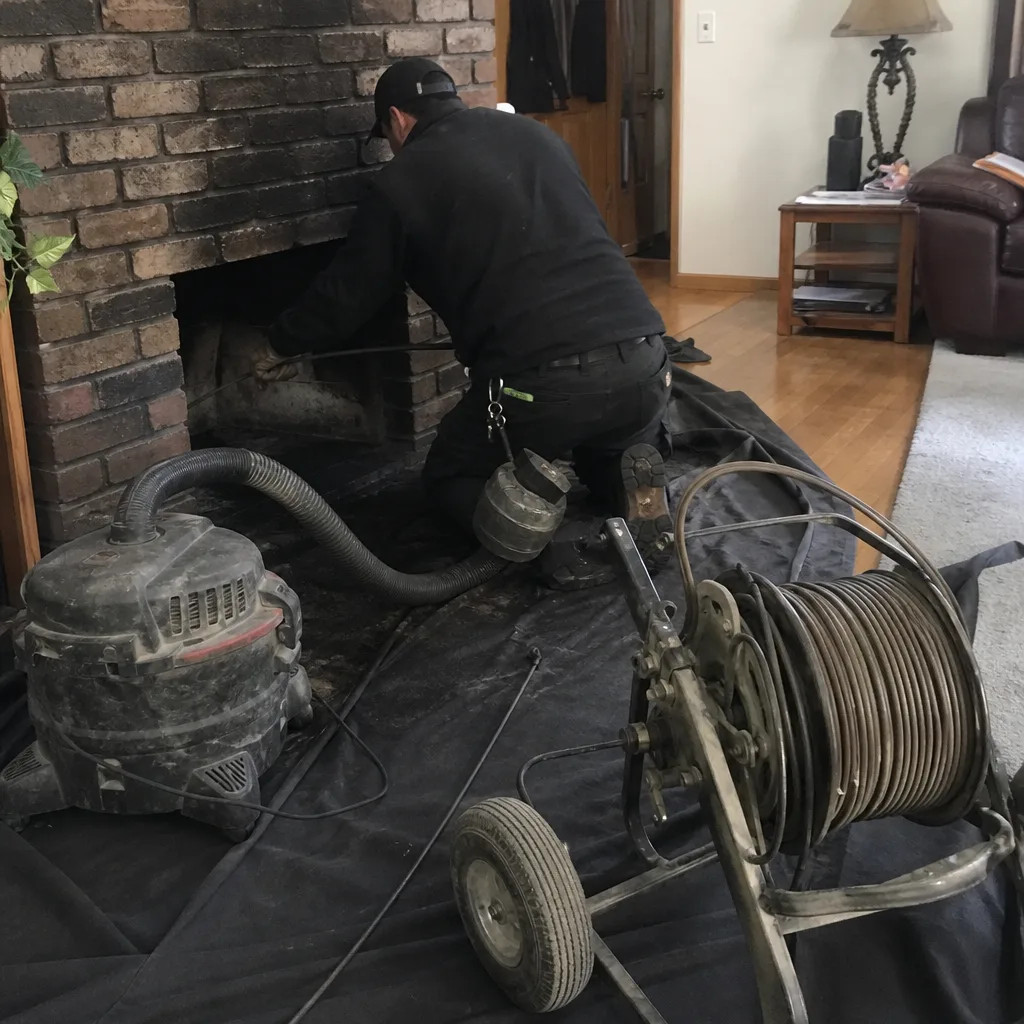 Before
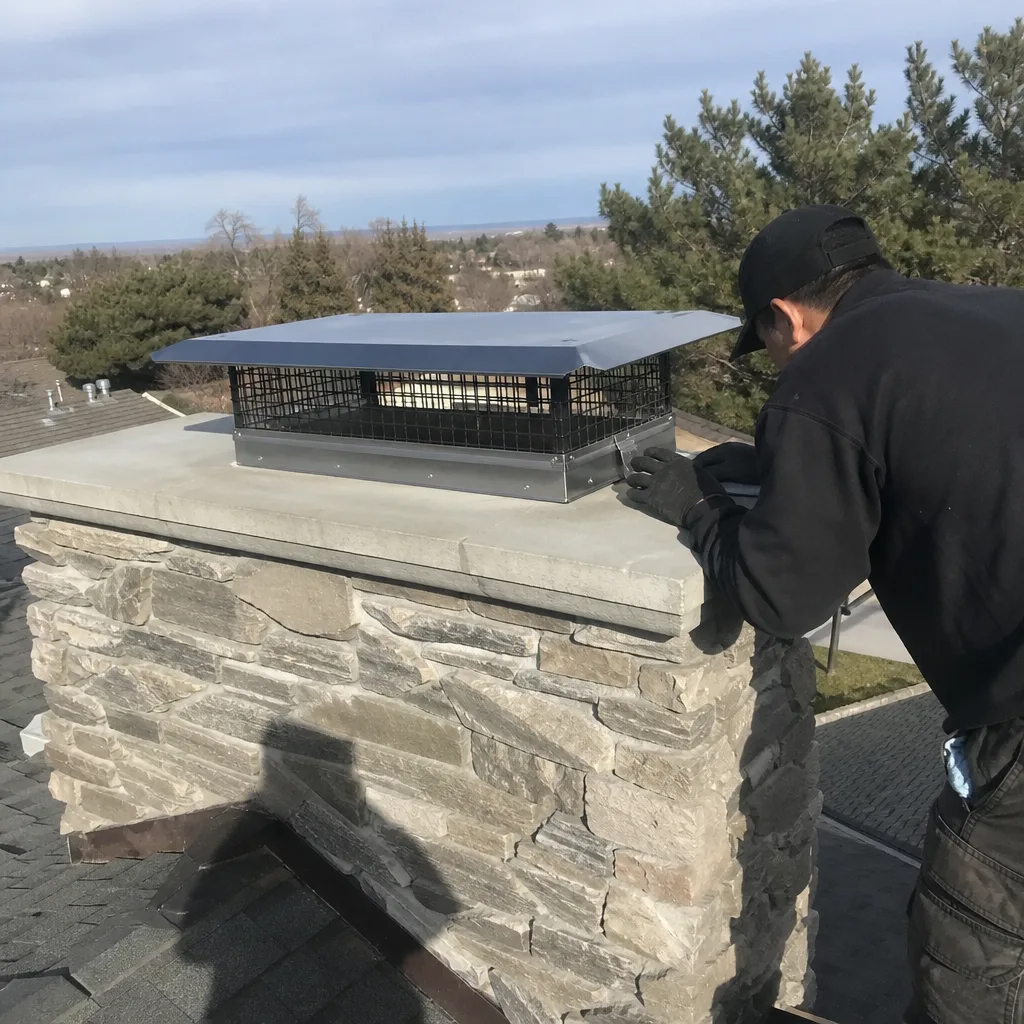 After
After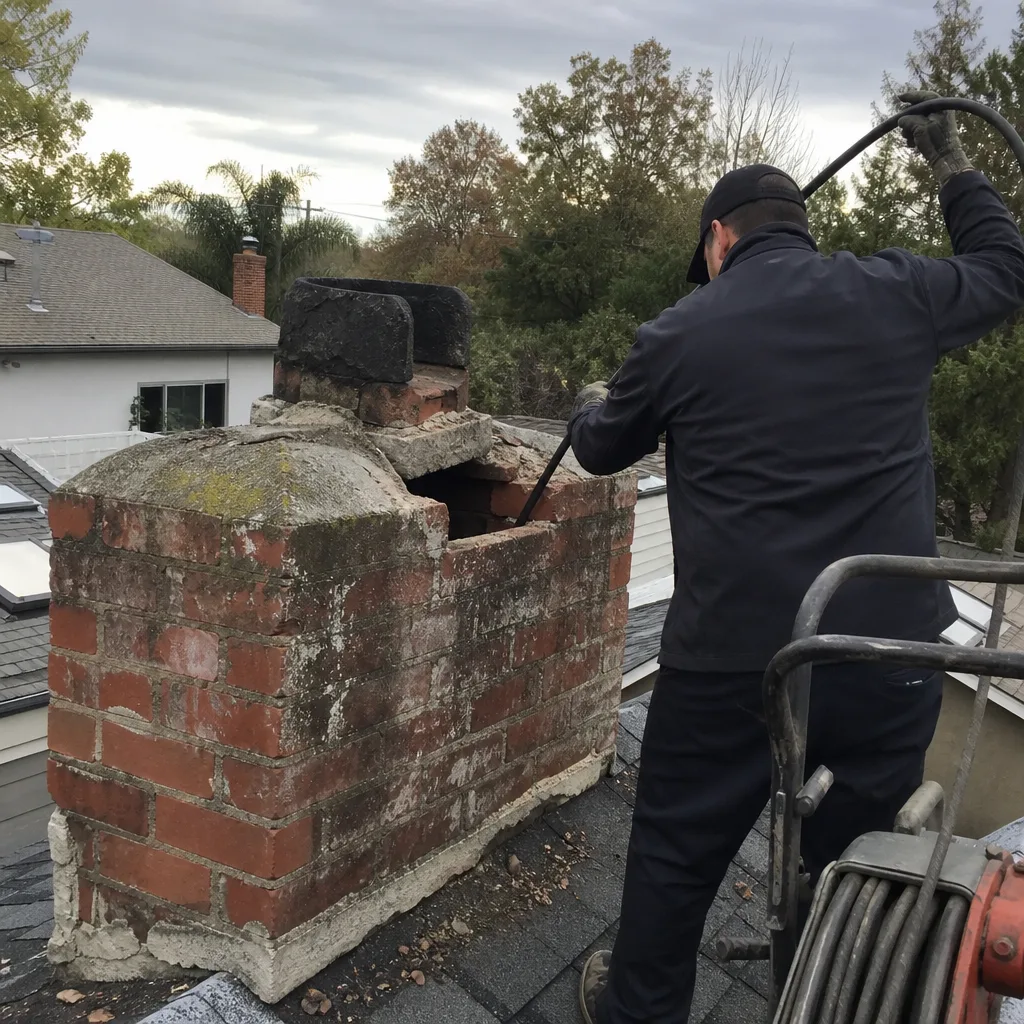 Before
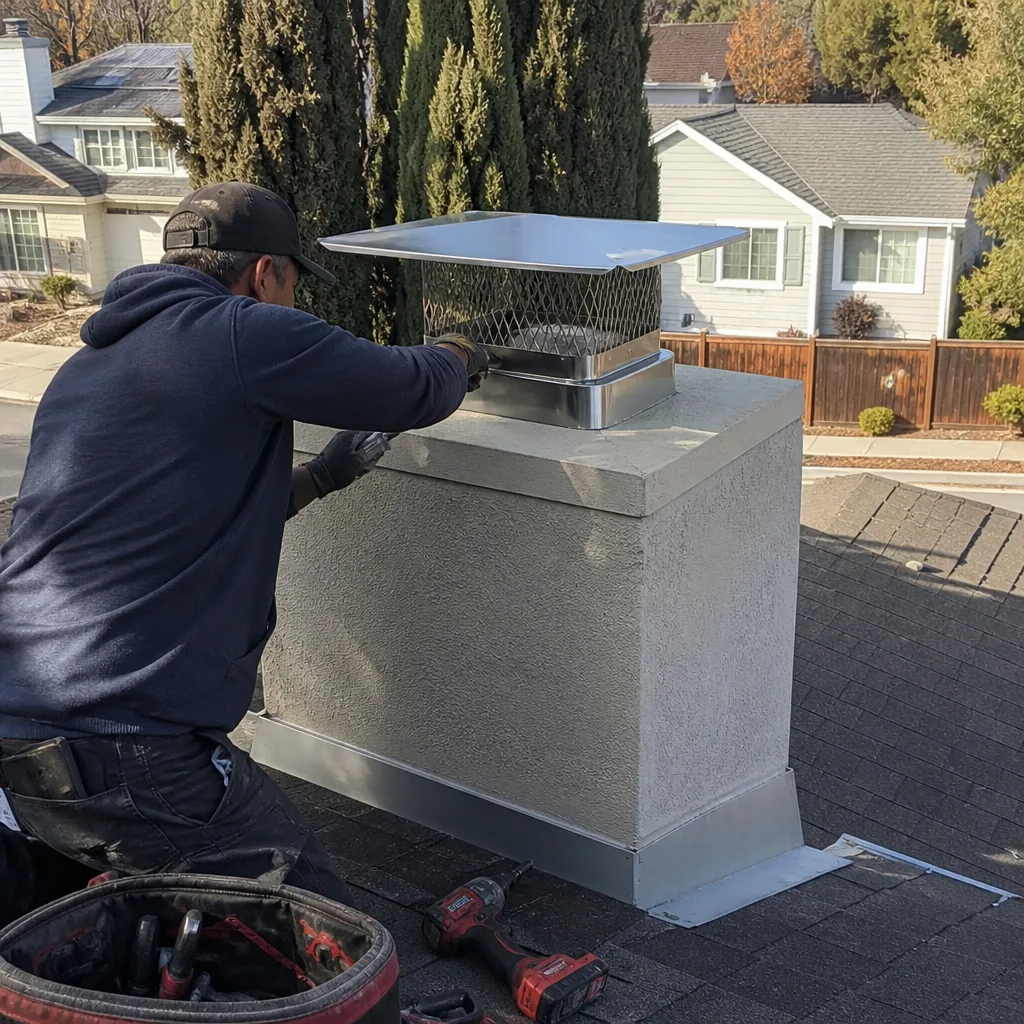 After
After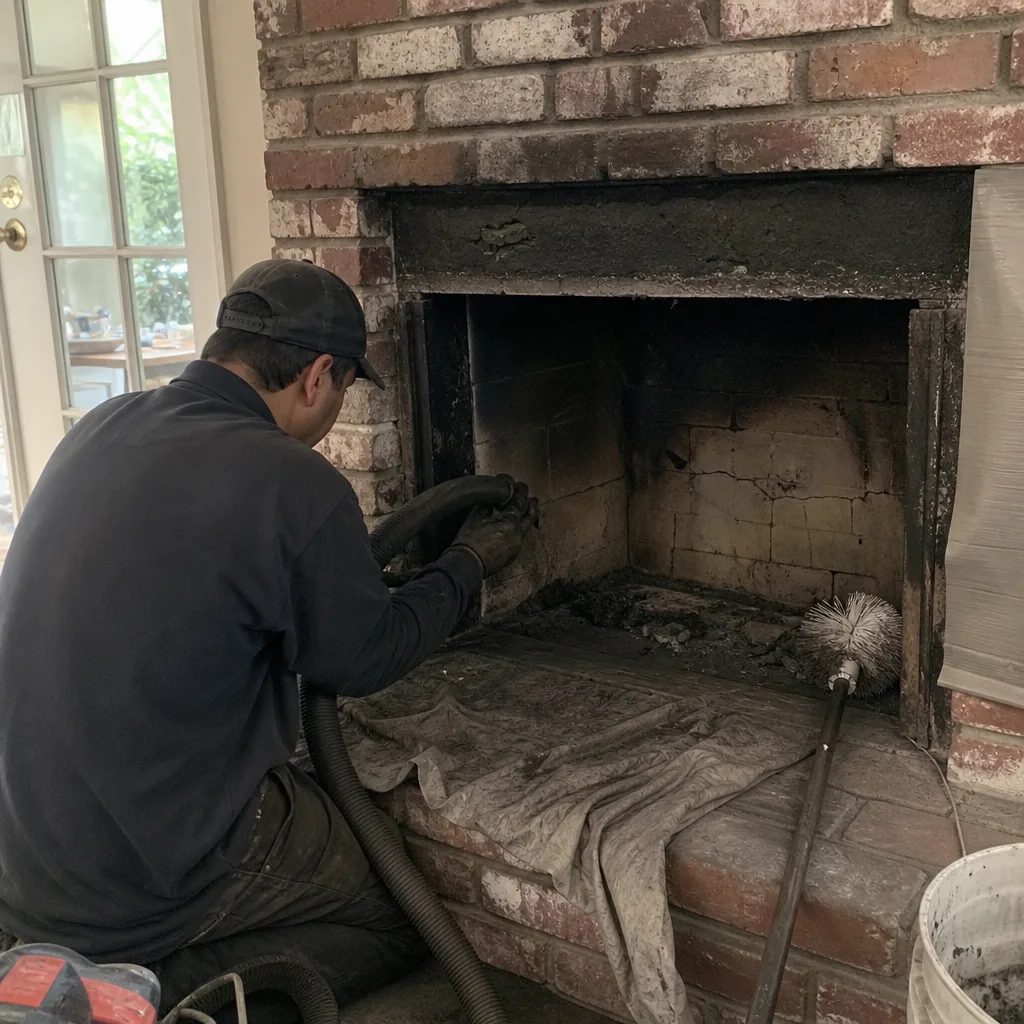 Before
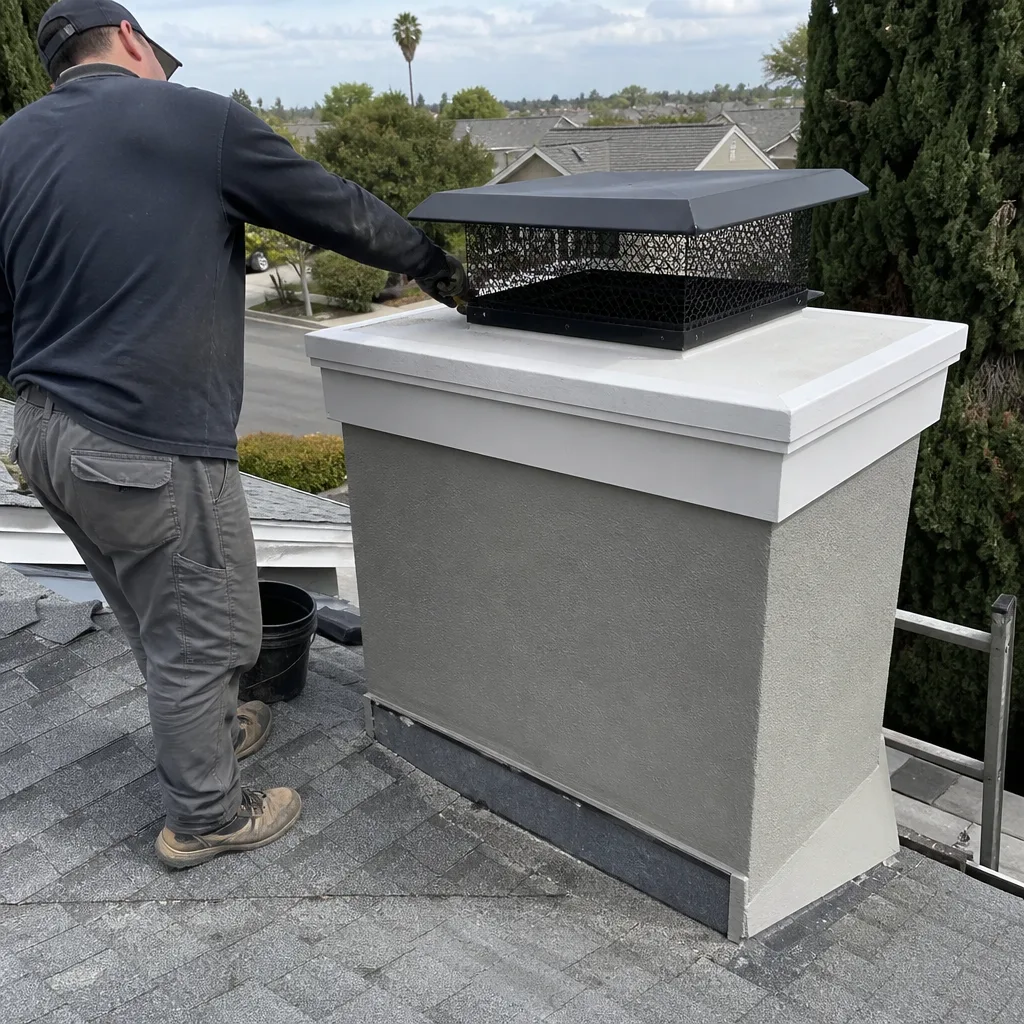 After
AfterWhen to Call a Professional
Any time you can see or smell creosote, hear debris fall when the chimney is tapped, see water stains on the ceiling near the flue, smell smoke in the house after the fire is out, or haven’t had the chimney inspected in more than two years. These are signals that something inside the flue has changed, and the only way to know what changed is with a lens or camera. Chimney work is also genuinely dangerous for DIY attempts: roof access on steep San Jose housing roofs, confined flue interiors, and the respiratory risk of creosote dust are all reasons this is not a weekend project. If a sweep finds stage three creosote, leave the chemical removal to a trained professional with proper ventilation and PPE. Chimney Sweep in San Jose is the right first call, and Ashby Chimney San Jose offers free estimates in San Jose – call (669) 266-5073.
Frequently Asked Questions
A standard chimney sweep in San Jose costs $169 to $249 for a single flue, with the higher end reflecting steep roofs, two-story chases, or heavy creosote. Sweep plus inspection runs $199 to $549 depending on whether the inspection is Level 1 (visual) or Level 2 (video). For a full breakdown of what drives that range, see the pricing table above. Call (669) 266-5073 for an exact quote – estimates are free.
With regular seasonal wood-burning use, sweep every year. With occasional use – a dozen fires or fewer per season – every two years is generally adequate, assuming stage one creosote only. Gas fireplaces don’t need sweeping but do need inspection every two to three years for venting and safety. San Jose’s short, hot burn season produces less creosote than a cold-climate long-burn season, but green wood from local suppliers can offset that advantage quickly. Chimney Inspection in San Jose answers the inspection side of that question in more detail.
You need a new liner if the existing one is cracked, spalled, or damaged enough that it can’t safely vent combustion gases, and that determination should always be backed by camera footage you can see. Minor liner flaking may not require replacement – sometimes a sweep and a recheck in two years is the right call. The line between “needs replacement” and “can wait” is a camera view, not a contractor’s say-so. We use liner materials from recognized trade brands like HeatShield and DuraFlex when replacement is actually warranted, and we show you the footage before we recommend anything.
Creosote builds up on the flue walls, and because creosote is flammable, a hot fire can ignite it into a chimney fire. Chimney fires burn hot and fast – hot enough to crack clay flue tiles and in worse cases spread to surrounding framing. Even without a fire, built-up creosote restricts draft, which pushes smoke and carbon monoxide back into the living space. The older masonry flues common in San Jose’s older neighborhoods are especially vulnerable because earthquake hairline fractures combine with creosote buildup. The sweep is cheap insurance by comparison. Call (669) 266-5073 if it’s been more than two years.
A Level 1 inspection is visual only – a flashlight and mirror look at the accessible parts of the flue, firebox, and damper. A Level 2 inspection adds video scanning, which is what you need after a chimney fire, earthquake, property transfer, or change in use. In San Jose, we recommend Level 2 for any flue that hasn’t been inspected in five-plus years, because the camera is the only way to see hairline cracks and hidden creosote. A Level 2 that doesn’t use a camera isn’t a Level 2.
Look them up on the CSLB license database at cslb.ca.gov. Check that the license is active, that the classification covers chimney work, and that there are no unresolved complaints or judgments. In Santa Clara County, unlicensed sweeps are the most common source of no-shows and price-switching. Five minutes on the CSLB site before you book is the cheapest insurance available. If you’re considering Fireplace Repair in San Jose, the same check applies.
The Bottom Line
Chimney cleaning in San Jose is three jobs: sweep, inspection, and repair scoping. The sweep removes flammable creosote. The inspection tells you what condition the flue is actually in, and that takes a camera for anything beyond the basics. The scoping tells you what needs work now, what can wait, and what needs nothing at all. Get all three, in writing, with a price before the work starts. Check the CSLB before you book. Burn dry wood and sweep annually if you burn regularly. And if the fireplace hasn’t been looked at in a few years, the right move is a call: (669) 266-5073. For more guides & resources, visit our blog.
Written by Nathan Corliss, Owner at Ashby Chimney San Jose, serving San Jose since 2002.